[ Blog ]
Job Costing for Concrete Contractors
September 7, 2026
A contractor on r/Concrete posted photos of 140 feet of finished sidewalk under the title "How much did I screw myself?" His own verdict, before anyone answered: "I underbid…by a lot." The thread pulled five hundred upvotes from contractors guessing at the damage.
Concrete work punishes loose numbers harder than almost any trade. The material is perishable, the crew is large on pour day, the truck bills by the yard whether you placed it or not, and the market race runs to the bottom. A Minnesota finisher bidding 5 to 10 jobs a week asked the same subreddit whether everyone else was also "bidding jobs just to stay busy and not make any money."
Job costing is how you stop guessing. This is the concrete-specific version: what belongs in the cost of a pour, the numbers that hide from concrete guys specifically, and one worked flatwork job. The general system lives in our Complete Guide to construction job costing and the finished-job math in How to Calculate Profit on a Construction Job; this post is what changes when the product arrives in a drum.
Every dollar figure in the worked example is demo math for illustration, not a market rate.
What a pour actually costs (five lines, not one)
The supplier's per-yard price is where the real number starts, not where it ends.
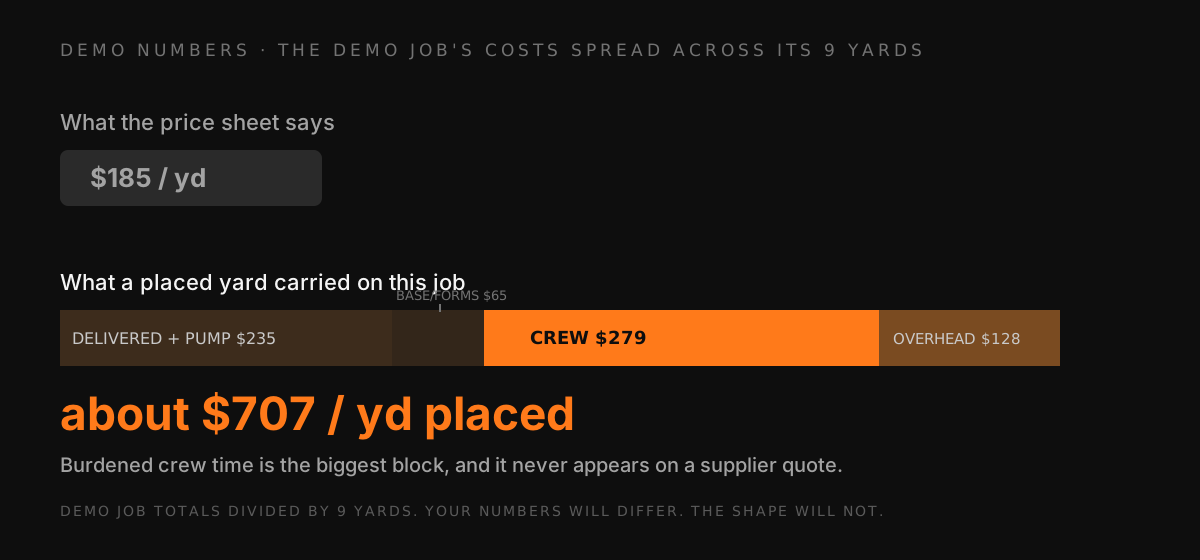
- Material, delivered. The quoted per-yard price plus everything on the ticket. A commenter in a recent r/Concrete pricing thread put his real cost plainly: around $160 to $170 a yard quoted, but "2k a truck after all their little fees and taxes." Whatever rides the ticket in your market, the job-costing rule is that it belongs on the job that ate it.
- Small-load and access charges, when they hit. These are real line items contractors report, not universal constants. A Washington contractor itemized his own small-pour economics back in 2005: a per-yard upcharge under 4 yards, and "250 every time the line pumper comes onsite" (his period prices, not today's). A ready-mix veteran on Breaktime warned about ordering tight back in 2006 for the same reason: run a quarter yard short and the make-up load carried a two-yard minimum at his plant. And a concrete pro on Reddit gave the operational answer: "add the short load fee onto each of your bids and move on." Whatever these fees are in your market, the job-costing rule is the same: they land on the job, priced in advance.
- Crew labor at the burdened rate. Pour day is the expensive day: everyone is there, and the hours are real whether the truck is on time or not. Burden math (wage plus payroll taxes, comp, insurance) is in the Complete Guide; comp rates on concrete crews are typically steep, so check yours before you bid off bare wages.
- Subs and iron. Demo and haul-off subs at invoice; the saw, the compactor, the trowel machine at rental or an hourly rate you set for owned equipment.
- Overhead share. The yard, the trucks, the insurance, the estimating nights. Every pour carries a slice or the company quietly eats it. One commenter who added up his father's masonry and flatwork business found that after workers comp, liability, taxes, equipment wear, and gas, the "profitable" new-construction work was clearing $800 a week: "There was no room for error."
The two numbers that hide from concrete contractors specifically
Hours that never get written down. Concrete hours sprawl past the schedule, and the slab decides when you're done. One flatwork finisher asked r/Concrete what to do about winter power-trowel slabs priced per square foot when "builders ordering at 11am" mean "a 2000 sqft slab in winter with a heater can take until 2am to burn out." A fourteen-plus-hour pour day, invisible inside a per-square-foot price, unless hours land on the job while they happen. Sitework owners describe the office half of the same leak: "keeping everything straight for billing" across two or three running jobs, or retyping time cards from a tracking app into QuickBooks by hand.
The bid math itself. A finisher with 13 years on the trowel said it straight when he went out on his own: "I have been placing and finishing for thirteen years but I always have worked for someone so I don't know how to run the numbers." He is the rule, not the exception. The race to the bottom makes it worse: a South Dakota contractor watching $2.50-a-foot bids in 2010 noted he often followed those same low bidders "three years later to resurface or tear out and replace" (2010 prices; the pattern is the evergreen part). A patio contractor put the feeling in one line: "I must be doing something wrong. I can't touch those prices." Usually nothing is wrong except the low bidder's math. Run your numbers through the Contractor Markup Calculator and the Profit Margin Calculator until the difference between a markup and a margin is reflex.
One worked flatwork job (demo math)
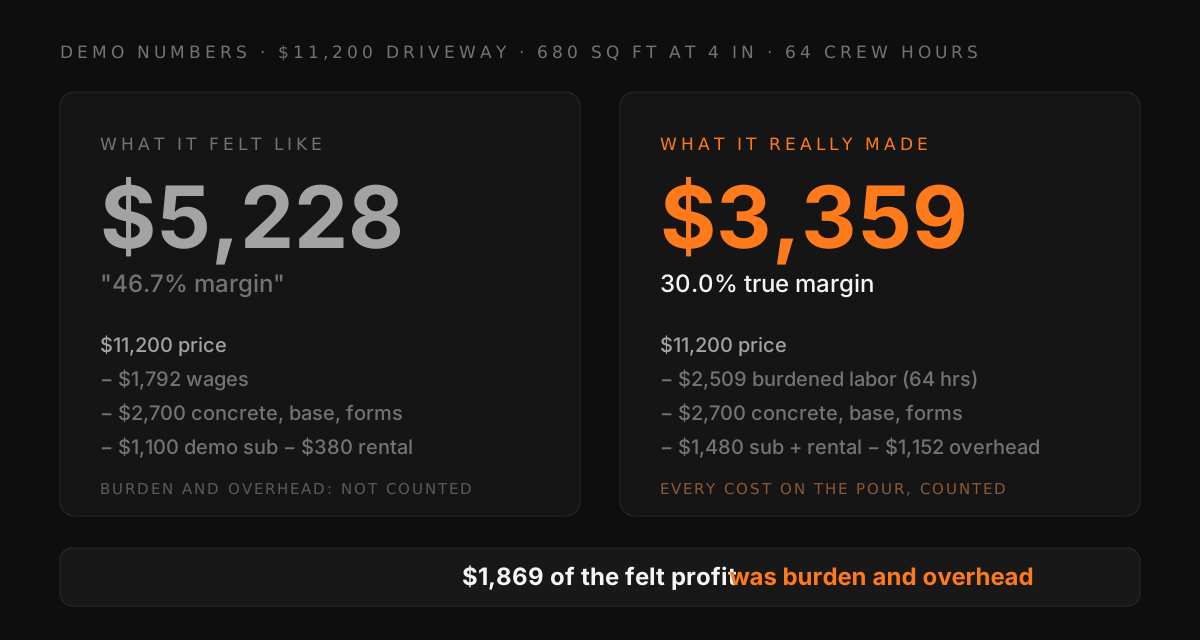
A 680-square-foot, 4-inch driveway tear-out and repour, contract price $11,200.
| Line | Amount |
|---|---|
| Contract price | $11,200 |
| Concrete, delivered (9 yd at 4 in, ~8.4 needed plus waste) + pump | − $2,115 |
| Base, rebar, forms, cure | − $585 |
| Demo + haul-off sub | − $1,100 |
| Burdened labor (64 crew hrs × $39.20; $28 avg wage + 40% burden) | − $2,509 |
| Saw + compactor rental | − $380 |
| Overhead share (64 hrs × $18) | − $1,152 |
| True job profit | $3,359 (30.0%) |
The wages-only version feels like $5,228 and 46.7 percent. The $1,869 gap is the burden and the overhead, the two lines concrete bids skip most.
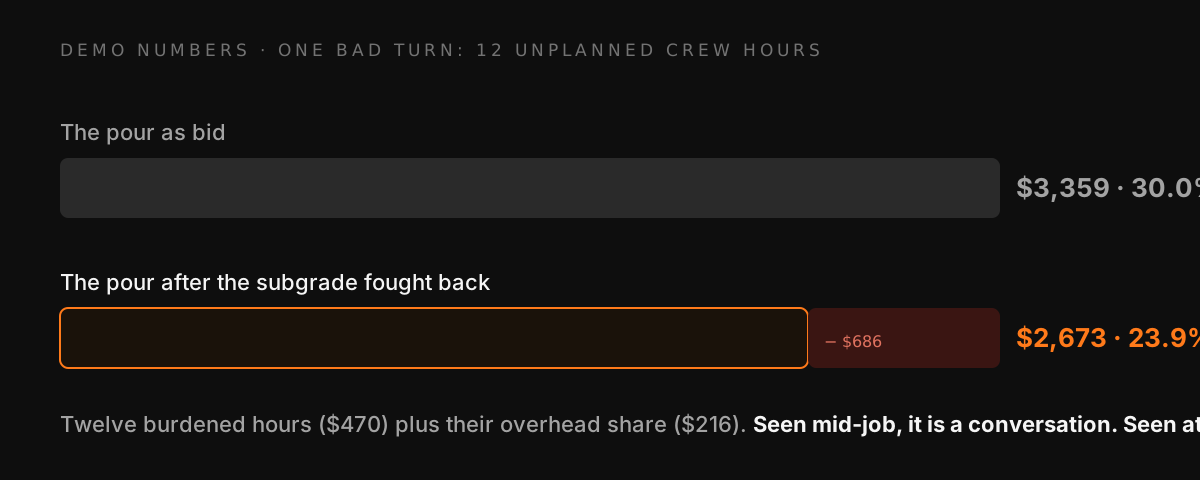
Now one bad turn: the subgrade fights back and the crew runs 12 hours over. Twelve burdened hours ($470) and their overhead share ($216) take the real number to $2,673 and 23.9 percent — on a job that "felt" like it made nearly half the contract. The overrun stories in the ledger show how fast this happens for real: a degreed-civil concrete contractor figured a slab cover at 23 yards and used 29 — "6 yards at $105/yard disappeared along with my profit on the job" (2008 prices, timeless failure mode). And a professional concrete builder explained why crews order heavy: running short means "7 guys standing around at ~$50/man/hr" waiting on a truck.
Feed your own numbers through the Job Costing Calculator — it builds the burdened labor line and the overhead share for you. Pricing the next pour? The Concrete Bid Calculator runs this same driveway forward: yardage, delivered concrete, crew hours, pump, overhead, and your margin into a bid price.
Pour days do not leave time for paperwork. SiteOps collects the inputs while the crew works: GPS clock-in at the site puts every hour on the right job, receipts get a job name at the supply house, and every job shows a running profit and loss. Start a 14-day free trial.
FAQ
How do I job-cost concrete work? Same frame as any trade, with concrete-shaped lines: material at the full delivered ticket price, any charges your own suppliers bill you, crew labor at the burdened rate, subs and equipment, and an overhead share per crew hour. Total cost against contract price gives true profit; divide by price for margin.
What should I include in a concrete bid? Everything the job will eat: yardage with a waste factor, the delivery charges your own suppliers actually bill you, burdened pour-day labor with a realistic finishing window, demo and disposal, equipment, overhead share, and your target margin computed as margin, not markup.
Why do concrete jobs lose money more often than they look like they do? The two most-skipped lines are labor burden (workers comp on concrete crews is typically steep) and overhead share. On our demo driveway those two lines were the difference between a felt 46.7 percent and a real 30 percent, before anything went wrong.
How do I track crew hours on pour days? By job, as they happen. Reconstructed pour-day hours come up short: the early start and the late finishing bleed out of memory. GPS clock-in tied to the job site captures them without anyone doing paperwork mid-pour.
Is a per-square-foot price enough to bid flatwork? A square-foot number is a useful sanity check against your market, but bids built only on one are how winter finishing runs to 2 AM inside a summer price. Build the bid from costs, then express it per square foot.
This article is general information for contractors, not accounting, tax, or legal advice. Dollar figures in the worked example are demonstration numbers, and quoted forum prices are the posters' own from their stated years. Confirm your real burden, overhead, and local supplier fees with your accountant and your suppliers.